Sewer Line Repair in St. Louis
Comprehensive Sewer Line Solutions in St. Louis County
Sewer lines are an essential part of your plumbing system as they are responsible for draining waste and contaminated water away from your home. Running from your home to either a septic tank or a municipal sewer, these drainage systems are indispensable for keeping you and your family safe from polluted water. However, even the toughest pipes tend to need repairs from time to time, and as our plumbing infrastructure increasingly ages here in St. Louis, sewer lines may even need to be replaced as they simply wear out from all their accumulated years of service. Chemical cleaners and byproducts can cause corrosion within sewer lines, while collected inorganic matter, from sanitary products to tangled hair, plastic, and paper, can all create massive blockages.
If you have noticed multiple drain backups, an unusually lush and soggy lawn, and/or foul odors on your property, your sewer line needs immediate attention. Do not hesitate to reach out to Kirkwood Plumbing to request an estimate for sewer line repair in St. Louis.
A broken sewer line is a plumbing emergency. Contact us now at (314) 207-3916 to request fast service from our plumbing team.
Common Causes of Sewer Line Issues
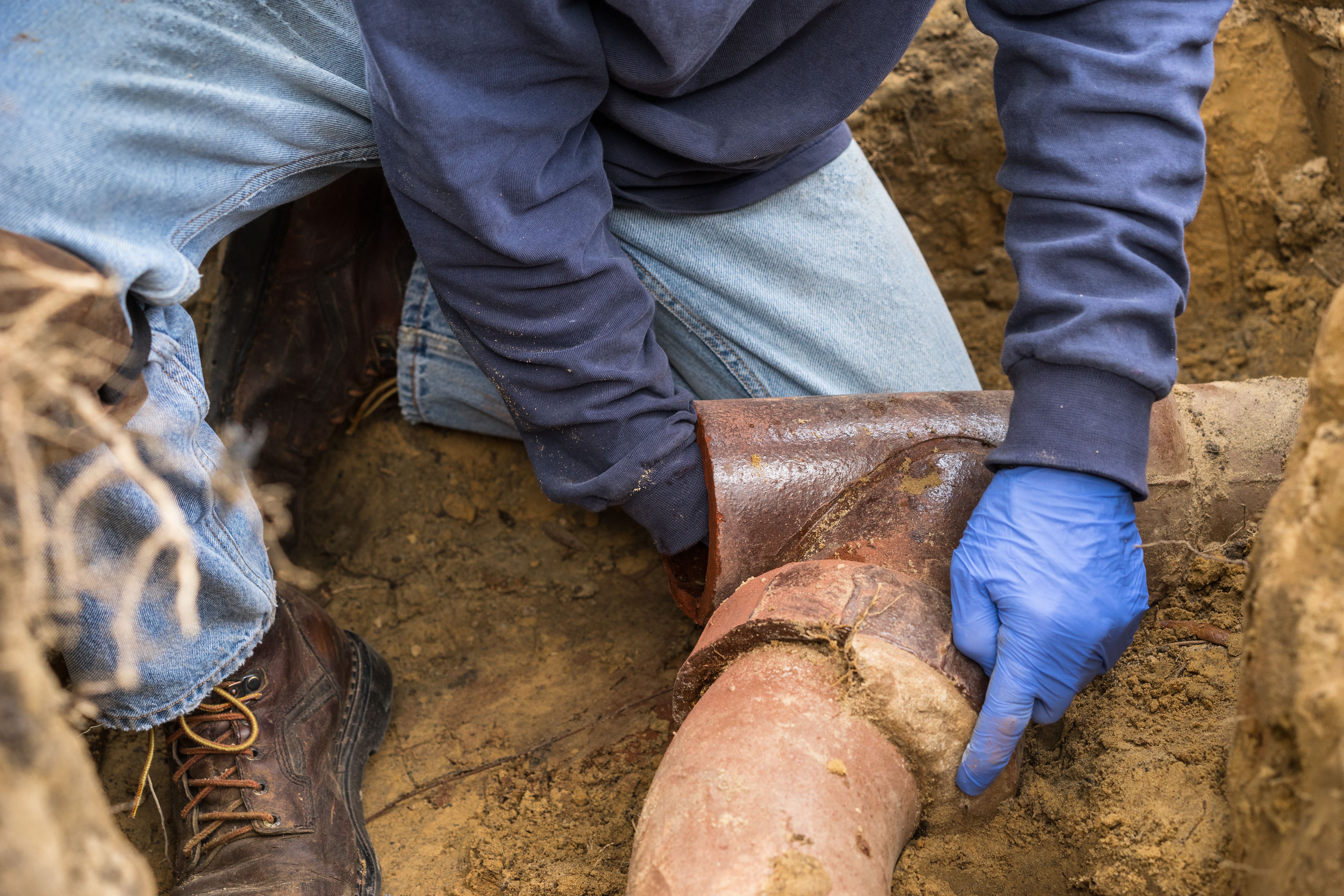 There can be a whole host of reasons that your sewer line may experience
issues. For example, one common cause of leaky pipes is that water is
seeping through a seal that has come loose or has broken free from its
casing. In other cases, there might be a hole in the pipe itself, which
often occurs if the drains have deteriorated due to old age or have even
rusted from harsh chemical compounds. There may also be a clog created
by a blockage within the pipe, or tree roots may have broken through the
walls of the pipe in search of water.
No matter what the situation is, our knowledgeable plumbers can identify the problem and then determine whether a minor repair or a total replacement is the more appropriate solution.
Indicators You Need Sewer Line Replacement
The best method for preventing a total sewer disaster is by taking proactive steps to contact our licensed St. Louis sewer line replacement experts for help. However, the question is how can you know that your sewer line is in immediate danger if it has not completely burst yet?
To help you determine whether your sewer line may be in trouble, watch for these warning signals, including:
- Unpleasant, sulfuric odors or smells of rotten sewage in and around your home.
- Visible signs of septic waste leaking from your pipes or fixtures, potentially caused by a malfunctioning septic tank or broken main line.
- Suspiciously green spots around your lawn and yard, showing there is underwater leakage.
Consequences of Ignoring Sewer Line Problems
Ignoring sewer line issues can lead to several potential consequences. First and foremost, it can result in worsening damage to your sewer system, leading to more extensive and costly repairs in the future. Sewer line problems, such as clogs or leaks, can cause sewage backups, which can be messy, unsanitary, and pose health risks to you and your family.
Additionally, untreated sewer issues can lead to damage to your property, including foundation problems, landscape damage, or even sinkholes. It's essential to address sewer line problems promptly to avoid these complications and ensure the proper functioning of your sewer system.
Reliable Support for Sewer Line Emergencies
To prevent any disasters involving burst sewer lines, immediately get in touch with our experienced, licensed professionals at Kirkwood Plumbing. We are available 24/7 for any emergencies that might strike at the last minute. There is no need to fear when you can receive superior sewer line repair in St. Louis, no matter the time of day or night.
Call us at (314) 207-3916 today or contact us online to get help from our St. Louis sewer line repair experts.
St. Louis County Sewer Line Repairs for Older Homes, Tight Lots, and Heavy Rains
From Kirkwood to the rest of St. Louis County, many homes sit on aging sewer infrastructure and older pipe materials that can be more prone to cracks, root intrusion, and shifting over time. Add in St. Louis weather swings and periods of heavy rain, and it’s common for homeowners to deal with sudden drain slowdowns, basement floor drain backups, or recurring clogs that keep coming back no matter how many times the line is snaked.
In the St. Louis area, sewer line problems often show up in ways that feel “small” at first—gurgling toilets, a tub that drains slowly while the sink backs up, or odors near a cleanout—then quickly turn into a messy emergency if the main line is compromised. If your home has mature trees close to the lateral, a sloped yard, or a basement, the risk (and the damage) can be higher when a blockage or break occurs.
When repairs involve the sewer lateral, local requirements may apply depending on where you live. Homeowners in parts of the region may need to reference resources such as the Metropolitan St. Louis Sewer District (MSD) and the St. Louis County Department of Public Works for guidance on sewer connections, easements, inspections, and right-of-way rules. If you’re within the City, the City of St. Louis also maintains public works resources that can help clarify what’s private vs. public responsibility. And before any digging begins, it’s smart to contact Missouri 811 to have underground utilities marked.
Kirkwood Plumbing helps St. Louis homeowners pinpoint what’s causing the issue—whether it’s roots, a belly in the line, corrosion, or a collapse—so you can make a clear plan before damage spreads to floors, foundations, or landscaping. If you’re seeing repeated backups, sewage odors, or wet spots in the yard, it’s worth addressing promptly to avoid a bigger disruption later.
Frequently Asked Questions About Sewer Line Repair
How Do Plumbers Determine Whether a Sewer Line Needs Repair or Replacement?
A plumber typically evaluates the condition of the sewer line, the location of the damage, and the extent of deterioration before recommending a solution. A camera inspection can help identify cracks, root intrusion, corrosion, collapsed sections, and other problems inside the pipe. Based on these findings, the plumber can determine whether a localized repair or complete sewer line replacement is more appropriate.
Can Tree Roots Damage Underground Sewer Pipes?
Yes. Tree roots naturally grow toward moisture and can enter sewer pipes through small cracks, loose joints, or deteriorating connections. Once inside, roots can expand and collect debris, eventually causing significant blockages or structural damage. Professional sewer line repair can address root intrusion and help prevent recurring problems.
How Long Does Sewer Line Replacement Typically Take?
The time required for sewer line replacement depends on the length of the pipe, the extent of the damage, soil conditions, and the accessibility of the affected area. Some projects can be completed within a day, while more extensive replacements may take longer. A professional plumber can provide a more accurate timeline after evaluating the existing sewer system.
What Is a Sewer Line Belly, and Why Is It a Problem?
A sewer line belly occurs when a section of underground pipe develops a sag or low spot. Instead of flowing continuously toward the municipal sewer connection or septic system, wastewater collects in the depressed area. This can contribute to recurring clogs, slow drainage, and unpleasant odors. Depending on the severity, correcting the pipe's alignment may require sewer line repair or replacement.
Does Homeowners Insurance Cover Sewer Line Repairs?
Homeowners insurance coverage for sewer line damage varies depending on the policy and the circumstances surrounding the problem. Some policies exclude damage caused by normal wear and tear, corrosion, or neglected maintenance. Additional coverage may be available for certain types of sewer backups or underground utility lines. Homeowners should review their policy and contact their insurance provider to understand their coverage.
Can Heavy Rain Cause Sewer Line Backups?
Heavy rainfall can contribute to sewer backups, particularly when municipal sewer systems become overwhelmed or groundwater enters damaged pipes. Homes with existing sewer line cracks, compromised connections, or drainage problems may be especially vulnerable. If your basement drains or toilets back up during periods of heavy rain, a professional plumbing inspection can help identify the underlying cause.
Who Is Responsible for Repairing a Damaged Sewer Line?
Responsibility for sewer line repairs depends on the location of the damage and applicable local regulations. In many cases, homeowners are responsible for the private sewer lateral connecting their property to the public sewer system. However, responsibility can vary depending on the municipality and the location of the affected pipe. A licensed plumber can help identify the problem area and explain what repairs may be necessary.
Can a Sewer Line Be Repaired Without Digging Up the Entire Yard?
Some sewer line problems can be addressed using trenchless repair methods, which may reduce the amount of excavation required. Depending on the pipe's condition, options such as pipe lining or pipe bursting may be available. However, not every sewer line is a candidate for trenchless repair. A professional inspection can help determine which repair approach is suitable for your property.
What Should I Do If Sewage Backs Up Into My Basement?
If sewage backs up into your basement, stop using plumbing fixtures that drain into the affected sewer line. Avoid direct contact with wastewater because it may contain harmful bacteria and other contaminants. If possible, keep children and pets away from the affected area. Contact an emergency plumber to identify the blockage or damage and arrange the necessary sewer line repairs. Professional cleanup may also be needed to address contamination.
How Can I Prevent Future Sewer Line Problems?
Regular plumbing maintenance can help reduce the risk of sewer line blockages and unexpected damage. Avoid flushing wipes, paper towels, feminine hygiene products, and other materials that can accumulate inside pipes. Be mindful of where trees and large shrubs are planted, particularly near underground sewer lines. If your property has older plumbing infrastructure, periodic professional inspections can help identify developing problems before they lead to major repairs.
Make Kirkwood Your First Plumbing Choice
-
 Workmanship Parts Guaranteed
-
No Overtime Charges
-
License and Insured
-
Exceptional Customer Service
-
Upfront Pricing
-
Locally Owned & Operated
 Workmanship Parts Guaranteed
 No Overtime Charges
 License and Insured
 Exceptional Customer Service
 Upfront Pricing
 Locally Owned & Operated

Hear From Our Customers
-
“Answered at 7am, was at our house by 7:45am for a kitchen emergency, finished and out the door at 8:09am. Solution oriented. We will call them again anytime we need a plumber.”
- Erika W. -
“Receptionist was very helpful and had a service person out within 3 hours for non-emergency. Great service overall and reasonable pricing.”
- Christine S. -
“Came on a Sunday night, and fixed the leak so quick. Greg was professional and pleasant.”
- Tom M. -
“Kirkwood Plumbing did an excellent job with our water heater! We needed a new water heater and scheduled to have an install done with them. They confirmed the job the day before and the guys were on-time for the job.”
- Mel A. -
“Kirkwood Plumbing answered the call first and we were very impressed by their employee...Greg! He came right in and got the work started - working quickly he resolved our problem.”
- Linda T.
Stay Informed
Read Our Blog For Tips & Tricks